New Paper: Evolutionary Balancing of Genetic Consequence and Innovation in Mammals Through Variable Number Tandem Repeats
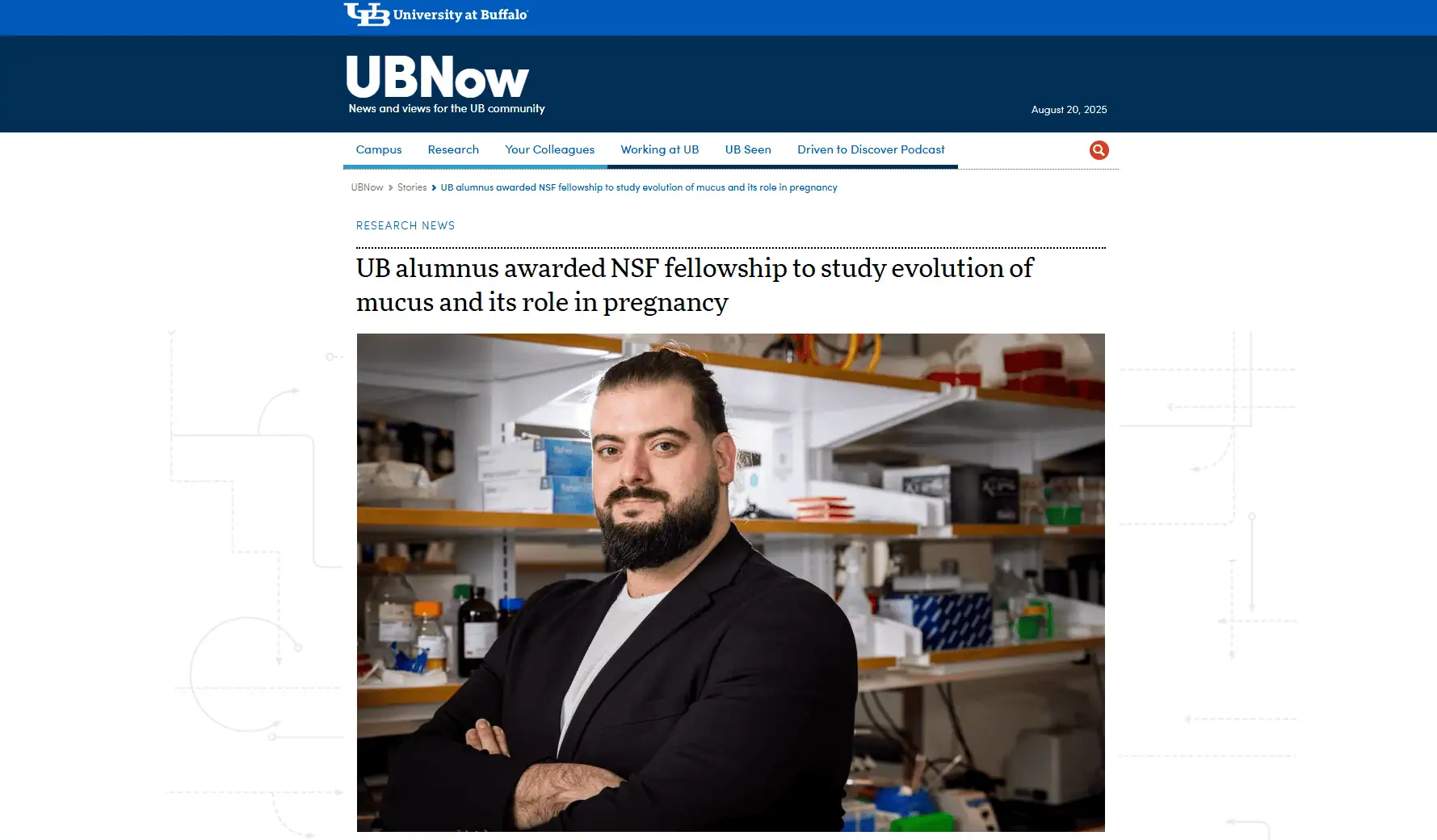
Petar Pajic, currently an NSF Postdoctoral Fellow at Yale University, has published a new review article in Genome Biology and Evolution exploring how VNTRs drive evolutionary innovation in mammals while carrying functional risk.
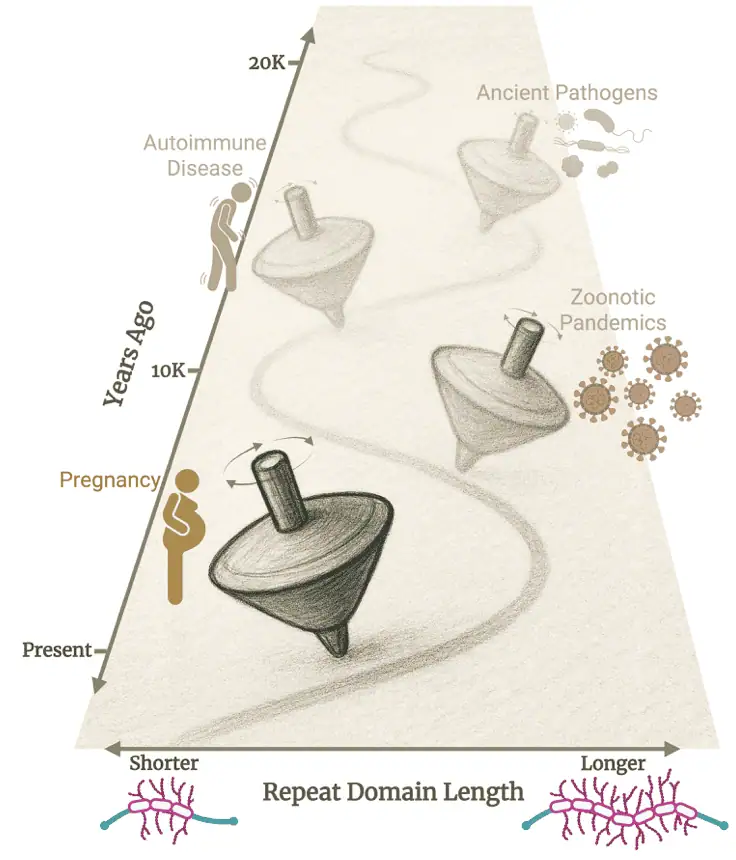
Petar Pajic, currently an NSF Postdoctoral Fellow at Yale University (Department of Chemistry), has published a new review article in the journal Genome Biology and Evolution.
Co-authored with Omer Gokcumen (Department of Biological Sciences, University at Buffalo), the paper appeared online on December 24, 2025, in Volume 18, Issue 1 (January 2026), and is available open access under a Creative Commons Attribution License (DOI: 10.1093/gbe/evaf250).
The review explores how “variable number tandem repeats (VNTRs) – highly mutable segments of DNA – serve as powerful drivers of evolutionary innovation in mammals, while also carrying significant functional risks.” Advances in long-read sequencing have enabled accurate mapping of these regions, revealing their influence on gene regulation, protein structure variation, and phenotypic diversity.
Key insights include VNTRs’ roles in modulating traits such as skin barrier function (FLG gene), height (ACAN), behavior (MAOA), and pathogen defense (mucin genes). The authors propose a framework centered on evolutionary tradeoffs, suggesting that balancing selection maintains VNTR variation, enabling adaptive benefits while also potentially causing disease susceptibility.
This work challenges traditional views emphasizing conserved sequences, instead highlighting VNTRs’ contributions to genetic variation and complex traits in mammals.
More writing